 Music · Travel · Lifestyle
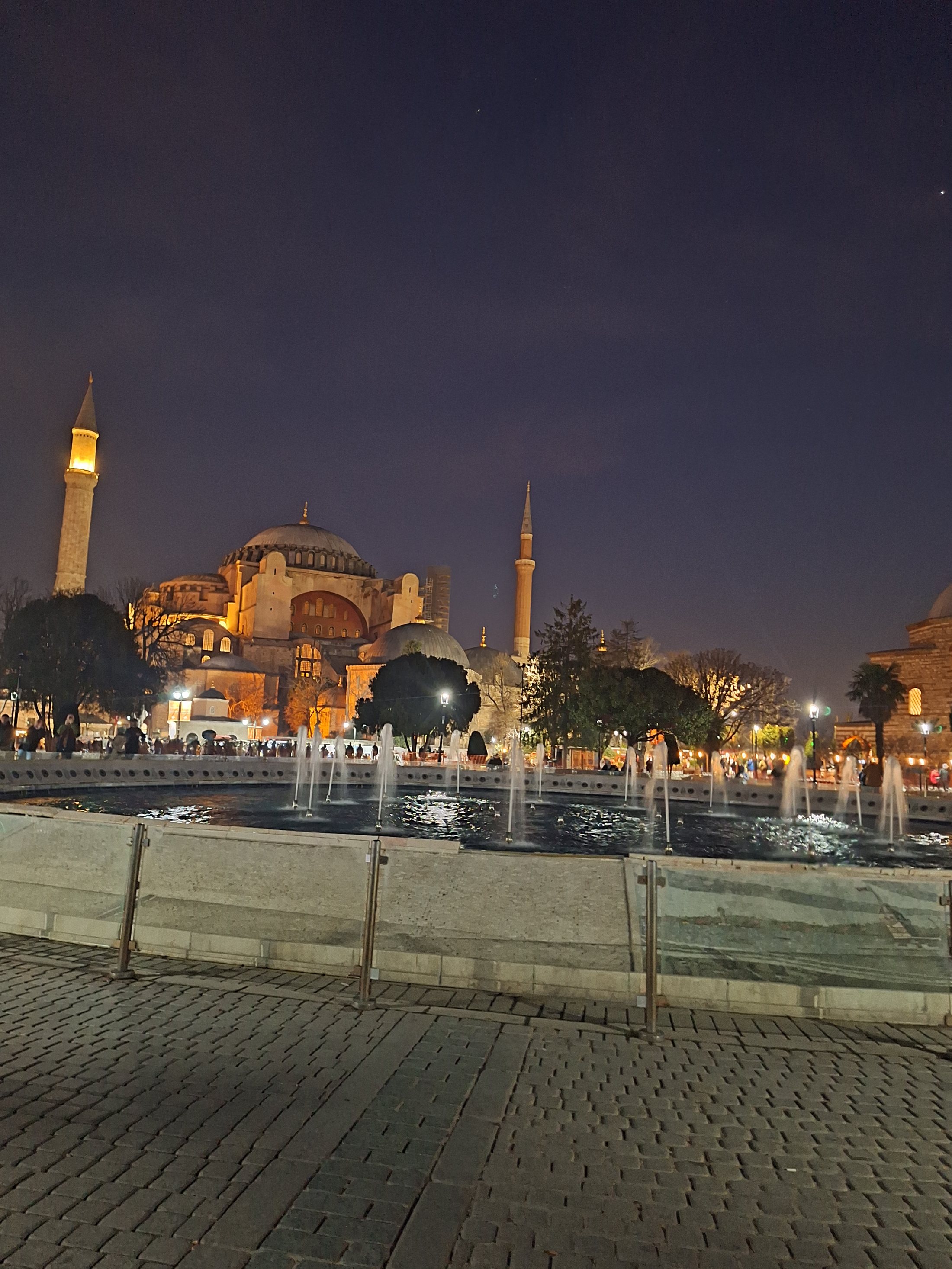
Anyone standing in front of the Hagia Sophia today sees a building so naturally part of Istanbul's skyline that it's easy to forget how often it has changed its function, its appearance, and even its religious meaning. The Hagia Sophia was the main church of Byzantine Constantinople, the stage for imperial ceremonies, the target of one of the city's most brutal lootings, an Ottoman mosque for centuries, later a museum, and since 2020 a mosque again. It was never just a building. It was always also a political symbol of who ruled the city, and how that rule was meant to be understood.
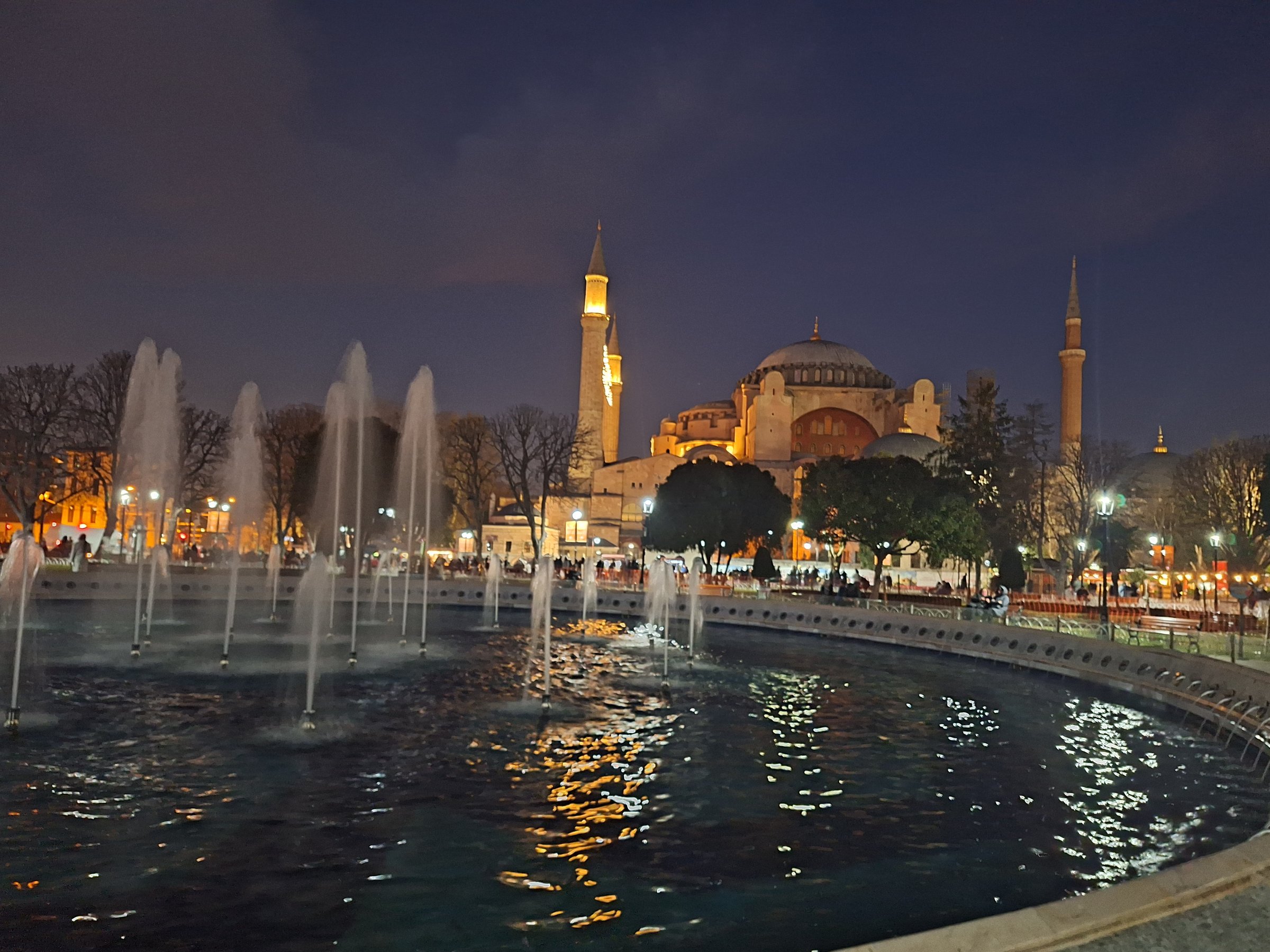
Anyone standing in front of the Hagia Sophia today sees a building so naturally part of Istanbul's skyline that it's easy to forget how often it has changed its function, its appearance, and even its religious meaning.
Architecturally too, this isn't a building you can simply file under "completed in 537." Its first dome partially collapsed barely twenty years after the church was consecrated, later earthquakes damaged further sections, Byzantine emperors had parts rebuilt, Ottoman sultans added minarets and Islamic furnishings, Mimar Sinan reinforced its structure, and the Fossati brothers carried out one of the largest restorations in its history in the 19th century. To understand the Hagia Sophia, you have to ask not only when it was built, but what happened to it in the 1,500 years afterward.
- Today's Hagia Sophia was built under Emperor Justinian I between 532 and 537.
- It was already the third major church on this site.
- The first dome partially collapsed in 558 and was rebuilt higher and steeper.
- In 1204, crusaders of the Fourth Crusade looted the church and then used it as a Latin cathedral.
- After the Ottoman conquest of 1453 it became a mosque.
- Christian mosaics were covered, damaged, or lost in various phases; some survived under later layers.
- In the 16th century, Mimar Sinan reinforced the structure of the already roughly thousand-year-old building.
- In 1935 the Hagia Sophia became a museum, and in 2020 a mosque again.
Two Churches Before Today's Hagia Sophia
The story begins long before Justinian. As early as the 4th century, a large church stood on this site, traditionally linked to Emperor Constantius II, son of Constantine the Great. It was consecrated in 360 and initially called Megale Ekklesia, the "Great Church." The name Hagia Sophia doesn't mean "Saint Sophia" in the sense of a female saint, but "Holy Wisdom" or "Divine Wisdom." Even the name shows that the building was intended to be far more than just a local parish church.
The first church was destroyed in 404 during severe unrest connected to the deposition and exile of Archbishop John Chrysostom. Emperor Theodosius II then had a new building erected, consecrated in 415. Only a few archaeological remains of this second church survive today, including fragments of its monumental entrance facade. These remains make clear that the site was religiously and politically charged long before Justinian.
The second church, too, wasn't lost slowly to age. It was destroyed by fire in January 532 during the Nika riots. That cleared the way for a new building that wasn't meant to simply be bigger, but to attempt something architecturally entirely new.
The Nika Riots and Justinian's Radical Rebuild
Justinian I had ruled since 527 and pursued an extraordinarily ambitious program. He reformed the law, waged wars to reclaim former Roman territories, and wanted to monumentally rebuild Constantinople as the capital of a Christian Roman Empire. At the same time, taxes, political conflicts, and the harsh governance of his circle bred strong resentment. When clashes around the chariot-racing factions of the Blues and Greens escalated in early 532, these tensions merged into an open uprising.
The cry "Nika!" — "Win!" — became the battle cry against the emperor. Large parts of the city center went up in flames, including the Hagia Sophia of that time. According to surviving accounts, the situation at times grew so dangerous that Justinian is said to have even considered fleeing. His wife Theodora's speech, which supposedly persuaded him to stay, became famous. Whether every word of that speech was actually spoken this way cannot be proven; Byzantine historians shaped speeches literarily. What is certain is that the government eventually crushed the uprising militarily, killing an enormous number of people.
Almost immediately afterward, Justinian began the rebuild. He commissioned Anthemius of Tralles and Isidore of Miletus, two men with extraordinary mathematical and geometric knowledge. They were not to design an ordinary basilica, but a space that combined the elongated form of a church with a massive central domed room. Only about five years later, on 27 December 537, the new Hagia Sophia was consecrated.
How the Dome Actually Works
The biggest technical challenge was erecting a huge round dome over a roughly square main space. The architects used pendentives, curved triangular transition surfaces that channel the dome's weight onto four massive main piers. Large half-domes extend the space to the east and west, while further vaults gradually transfer the loads into the outer walls and supporting structures.
The central dome is about 31 metres in diameter. A row of windows runs around its lower edge, letting light in directly beneath the dome's shell. This makes the massive construction look visually lighter, almost as if it were floating above the space. Byzantine authors already described this effect with enthusiasm. A 6th-century visitor knew hardly any comparable interior in which light, marble, and gold mosaic created such an enormous spatial effect.
This beauty came at a price, though. The construction was structurally extremely demanding, and the unusually fast building process likely encouraged problems too. The Hagia Sophia was technically brilliant, but it was never a completely trouble-free building.
Why the First Dome Collapsed
Several earthquakes strained the young church. In 558, a large part of the first dome collapsed. Justinian's prestige project was barely twenty years old when its most important architectural element had to be rebuilt. Responsible for the new dome was Isidore the Younger, a relative of the original Isidore of Miletus.
The replacement dome was built higher and steeper. This changed the distribution of forces and, at the same time, the outer silhouette. In 562 the church could be consecrated again. In later centuries too, earthquakes caused further damage and repairs, which is why the dome we see today isn't simply unchanged from 537.
This detail matters, because it frees the Hagia Sophia from the idea of a "frozen ancient masterpiece." Its history has, from the start, been a history of repairing, reinforcing, and adapting.
The Hagia Sophia as the Centre of Imperial Court and Patriarchate
The Hagia Sophia was the most important church of Byzantine Constantinople and closely tied to the patriarch and the imperial court. Major religious festivals, imperial ceremonies, and processions passed through this space. The emperor was not a priest, but his rule was understood within a Christian conception of empire and divine order. In the Hagia Sophia, liturgy and politics met directly.
The furnishings reflected this claim too. Marble from various regions of the empire, precious metals, elaborate liturgical vessels, and gold mosaics made the interior one of the richest sacred spaces of the Middle Ages. Emperors and empresses had themselves depicted in mosaics next to Christ or the Mother of God. Such images weren't private family portraits, but political statements about the dynasty's place within a divinely ordered world.
This enormous religious and material significance explains why the church became a particularly attractive target for looters in 1204.
The Fourth Crusade wasn't originally meant to conquer Constantinople at all. Financial obligations to Venice and Byzantine disputes over the throne, however, led the crusader army to appear before the city in 1203. After an initial intervention, the political agreements fell apart. In April 1204 the crusaders finally took Constantinople.
What followed was days of looting, among the worst catastrophes in the city's history. Palaces, houses, monasteries, and churches were plundered. Relics, liturgical vessels, precious metals, and works of art fell into Western hands. Numerous objects were carried off to Venice, France, and other parts of Europe; others were melted down or destroyed for their material value.
The Hagia Sophia too was looted and desecrated. Its rich liturgical furnishings were an especially valuable target. Medieval accounts describe the events drastically; individual details need to be checked critically, but there is no doubt about the basic fact of the looting. After the conquest, the church was used as a Roman Catholic cathedral under the newly created Latin Empire. Only in 1261, after the city was recaptured by Michael VIII Palaiologos, did it return to Orthodox use.
1204 didn't automatically and directly lead to the fall of 1453. Almost two and a half centuries lie between the two events. Still, the looting weakened the Byzantine Empire profoundly. Wealth, art, relics, and economic resources were lost, and restored Byzantine rule returned in 1261 to a significantly weakened capital.
1453: Mehmed II and the Conversion into a Mosque
On 29 May 1453, the troops of Mehmed II conquered Constantinople. The sultan, only 21 years old, thereby ended the Byzantine Empire and began reorganising the city as the centre of his own project of rule. After the conquest, the Hagia Sophia was converted into a mosque.
This conversion wasn't a single renovation on a single day. A mihrab was installed to indicate the direction of prayer toward Mecca, a minbar served for the Friday sermon, and over the following centuries minarets, an imperial loge, fountains, mausoleums, and other elements were added. The four minarets visible today don't all date from the same phase.
The Hagia Sophia remained a mosque for almost five centuries. So the "Ottoman phase" is itself, again, a long history made up of different sultans, architects, repairs, and religious changes.
What Really Happened to the Christian Images
This is where particularly simple narratives arise. One claims: "The Ottomans came and destroyed all the Christian images." The other makes almost the opposite claim, that the Ottomans deliberately saved the mosaics for later generations. Both versions oversimplify what actually happened.
With the conversion into a mosque, Christian figurative depictions in the prayer hall could no longer hold the same visible liturgical function. In various phases, numerous mosaics were therefore covered, plastered over, or otherwise concealed. Some depictions were damaged or lost to earthquakes, moisture, renovations, and repairs. Others survived remarkably well under later layers.
Herein lies the historical paradox: the covering wasn't done so that art historians could uncover something centuries later. Yet it unintentionally protected individual mosaics from further damage. When restorers removed later layers in the 19th and especially the 20th century, significant parts of the Byzantine pictorial decoration reemerged as a result.
Mimar Sinan and the Structural Engineering
By the 16th century the Hagia Sophia was already roughly a thousand years old. Repeated earthquakes and the enormous lateral forces of the dome had weakened the building. Mimar Sinan, the most important architect of the classical Ottoman Empire, therefore studied its structural engineering intensively and had, among other things, massive external buttresses and further reinforcements added.
Anyone who looks at the Hagia Sophia from outside today and wonders why the structure looks so massively propped up in places is looking at exactly this long history. Its outer form isn't only the elegant vision of the 6th century, but also the result of later attempts to keep this difficult building standing at all.
Sinan also saw the Hagia Sophia as an architectural challenge. In his own mosques he developed different solutions for large central domed spaces. The relationship between Byzantine and Ottoman architecture is therefore far more interesting than a simple story of "Christian before, Muslim after."
The Fossati Restoration in the 19th Century
Between 1847 and 1849, Sultan Abdülmecid had the Hagia Sophia comprehensively restored. The Swiss brothers Gaspare and Giuseppe Fossati stabilised parts of the building, renewed decorations, and examined Byzantine mosaics that had been hidden under later layers.
Some mosaics were uncovered and documented, then covered again because of the building's use as a mosque at the time. At the same time, elements that strongly shape the interior today were created or renewed. Especially striking are the huge round calligraphic panels by Kazasker Mustafa İzzet Efendi.
When Byzantine mosaics, Ottoman calligraphy, mihrab, minbar, and late-antique architecture all appear in view at once today, you're not looking at a uniformly planned decoration. You're looking at centuries layered on top of one another in the same space.
Museum from 1935, and a Mosque Again Since 2020
After the founding of the Republic of Turkey, the status changed again. In 1935 the Hagia Sophia opened as a museum. During this period, restorers uncovered numerous Byzantine mosaics and documented them systematically. The museum era shaped international perception of the Hagia Sophia for decades, as a monument in which Byzantine and Ottoman history were visible at the same time.
In 2020, the museum status was lifted and the Hagia Sophia became a mosque again. The step is still assessed differently today. For many Muslims, its use as a mosque carries great religious and historical meaning, while others see museum status as a particularly fitting form for a monument that connects so many religious and political eras.
A serious historical article doesn't need to settle this discussion for the reader. It should simply make clear that this most recent change, too, has long since become part of the building's history.
What to Look at Deliberately Today
Your eyes go almost automatically to the dome, but the space opens up better if you deliberately look at its different layers side by side. The mihrab sits slightly offset from the original Byzantine axis, because it has to face Mecca. The great calligraphy panels date from the 19th century, even though they belong to the space so naturally that they seem much older.
Where gallery areas are accessible, take a close look at the imperial mosaics. They show how closely religion and rule were connected in the Byzantine Empire. The so-called Weeping Column is also among the well-known objects, surrounded for centuries by stories of healing and miracles.
What the Mosaics Tell Us About Power
The surviving mosaics are far more than decorative remnants of a vanished church. They show how closely religion and political rule were intertwined in the Byzantine Empire. Emperors and empresses appear next to Christ or the Mother of God not because someone wanted to create a courtly family album, but because such images conveyed an idea of legitimate, God-willed rule. Standing before the mosaic of Constantine IX Monomachos and Empress Zoe, you're not simply looking at two historical figures in precious clothing, but at a political visual language in which patronage, piety, and dynastic self-presentation belong together.
The Deësis mosaic on the upper gallery is also particularly impressive. It dates from a time when the Byzantine Empire no longer had anywhere near the power and size of Justinian's era. Yet the art achieved extraordinary refinement. The faces appear more individual, the modelling softer, the emotional impact more immediate than in many older depictions. This is precisely an important correction to the idea that the late Byzantine Empire was culturally just a weak shadow of its past. Politically it had shrunk, but artistically it could still produce something extraordinary.
The monumental figure of Mary in the apse must also be seen in its historical context. It was created after the end of the Byzantine Iconoclasm, an era in which figurative religious images had at times been banned and destroyed. That Mary with the Christ child once again appeared prominently in Constantinople's most important church space was therefore itself a statement. The Hagia Sophia tells not only of the later shift between Christianity and Islam, but equally of fierce conflicts within Christianity itself.
Why the Exterior Matters Just as Much as the Interior
Many visitors want to get under the dome as fast as possible. Yet the exterior explains at least as much about the building's history. From outside, the Hagia Sophia looks irregular, heavy, and in places almost assembled piece by piece. Large buttresses, annexes, mausoleums, and differing wall surfaces show how often the building had to be intervened upon. This very irregularity is historically valuable, because it makes visible that the church, or mosque, wasn't simply completed in 537 and then just used unchanged.
The Ottoman mausoleums in the immediate surroundings in particular show that the site gained new dynastic significance after 1453. Several sultans and members of the ruling family were buried here. This created an Ottoman space of memory beside and around the former centre of Byzantine Christianity. The different eras don't sit cleanly separated side by side; they literally interlock.
The minarets, too, belong to different building phases. Today they look so self-evident, as if they had always belonged to the building, yet they weren't built at the same time. Early Ottoman additions were later replaced or extended, while at the same time the structural problem of the huge domed building kept presenting itself. Anyone looking at the Hagia Sophia today therefore sees a Byzantine basic concept that was built onto, reinforced, and reinterpreted by the Ottomans over centuries.
The Hagia Sophia as a Space of Sound and Light
One aspect that almost completely disappears in many descriptions is the effect of sound. In a huge space shaped by marble and vaults, a voice behaves completely differently than in a small church. Liturgical chant could produce long reverberation times, so that individual notes blended into one another and the space itself acted almost like an additional instrument. Modern acoustic research has shown that the Hagia Sophia has an exceptionally long reverberation. For Byzantine liturgy, that wasn't incidental: music, procession, incense, and light belonged to an overall experience that made the church's sacred claim physically felt.
Light was part of this effect too. Sunlight fell through rows of windows at different times of day, hit marble surfaces and gold mosaics, and constantly changed the space. The windows at the base of the dome in particular made the massive construction appear lighter. A 6th-century visitor knew no electric spotlights and no evenly lit interiors. Brightness was ever-changing, and that's exactly why a bright gold ground could feel especially intense in an otherwise darker church.
This sensory dimension explains why ancient and medieval authors didn't just describe the Hagia Sophia technically, but reacted almost overwhelmed to the impression the space made. The building wasn't meant merely to prove that Justinian had a lot of money and good engineers. It was meant to make an idea of divine order tangible. Even if you don't share that belief, you understand the architecture better if you don't view it only as a geometric problem.
"At the consecration, Justinian is said to have called out: Solomon, I have surpassed you." This is an old tradition and fits the building's enormous ambition. Whether these exact words were really spoken cannot be proven.
"After 1453 the Ottomans destroyed all the Christian mosaics." False. Images were lost and depictions were damaged, but many mosaics were covered in various phases and could later be uncovered again.
"The Hagia Sophia has had the same dome since 537." False. The first dome partially collapsed in 558 and was rebuilt in an altered form; later earthquakes led to further repairs.
My Thought on This Place
Sultanahmet is, for me, one of those places in Istanbul where something shifts the moment you arrive. On one side stands the Hagia Sophia, opposite it the Blue Mosque, and in between people from what feels like every corner of the world. It's crowded, sometimes really very crowded, but strangely I hardly experience these people there as strangers. Everyone has come for their own reason, and yet at some point everyone ends up standing in front of the same buildings, looking up.
There's one moment inside the Hagia Sophia I'll probably never forget. During our visit, prayer began, and suddenly I had tears in my eyes. Not because I'd set out to be especially emotional. Out of nowhere, I thought of my grandmother. Both my grandmothers were very religious, one of them had an especially deep reverence for God, but neither of them ever got the chance to visit Istanbul. By the time travel would theoretically have become easier for them, their legs no longer cooperated in old age.
In the middle of that prayer, I suddenly thought about how much my grandmother would probably have loved this moment. How gladly would she have prayed here, just once? Around me were people of different skin colours, languages, and countries of origin. At the front, people were praying. Behind them, visitors waited for the prayer to end so they could keep looking around the Hagia Sophia. Maybe they were Christians, maybe they belonged to another religion, or none at all. In that moment, it simply didn't matter.
Maybe that's exactly why it stays with me so much — because the Hagia Sophia has lived through plenty of centuries in which people didn't manage this kind of respect at all. It was looted, religions and rulers changed, art was stolen, and people fought each other. When people from all over the world can stand peacefully in the same building today, without everyone having to think the same way, that's not a small thing to me.
We can't create world peace single-handedly. But we can decide how we behave at home, how we speak about others, and how we treat people the moment we step out our front door. It has to start somewhere.
– Amra